

28 Jul No Wash Bay? How Detail Shops Wash Vehicles Without Proper Drainage
Plenty of successful detail shops operate out of buildings that were never designed for washing vehicles. The space is right, the rent is right, and the location is right. The problem is that there is no wash bay.
That means no trench drain, no sloped floor, and no plumbing designed for wash water. As a result, vehicles often get washed on the shop floor and squeegeed toward a floor drain. Other shops wash right outside the roll-up doors and let the water run across the lot.
Both habits may feel harmless, but both can create compliance problems. In fact, one of them may already violate the rules at your building.
Here is what shop owners need to know and how a wash mat reclamation system can solve the problem for a fraction of what a permanent wash bay build-out costs.
The Two Habits That Get Shops in Trouble
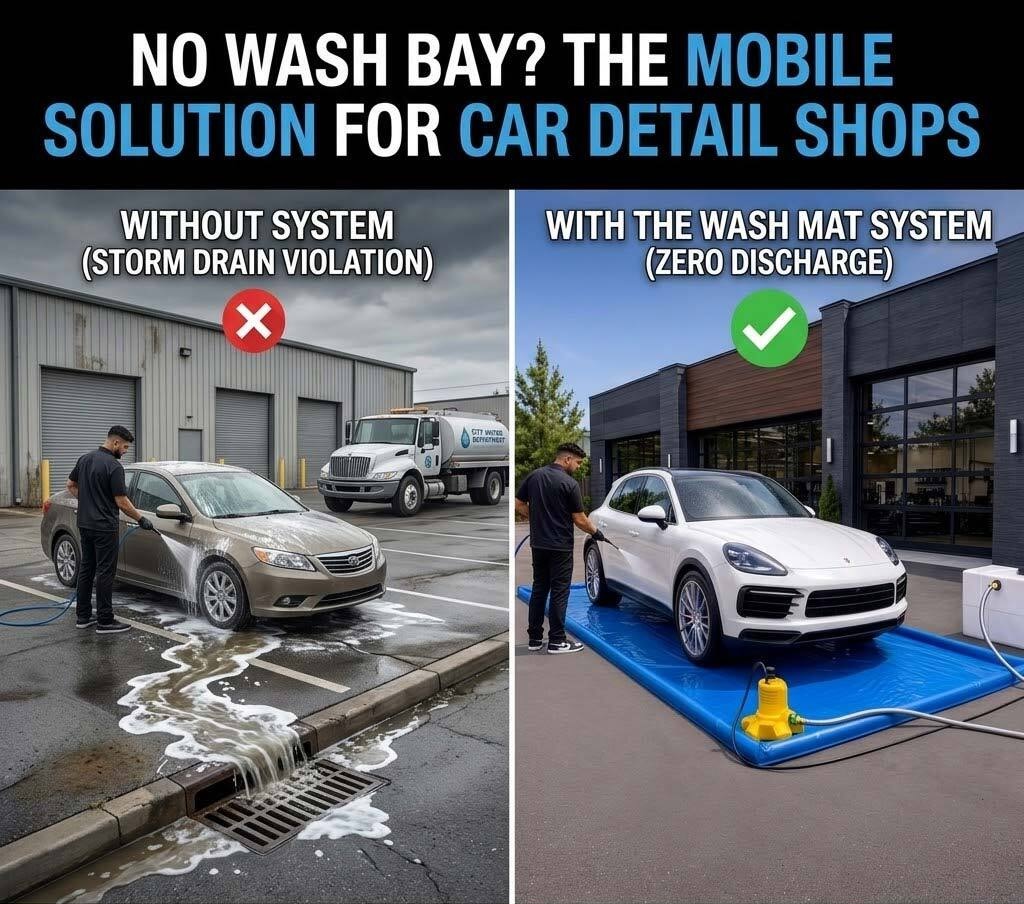
Washing out back. The pavement behind your shop drains somewhere, and that somewhere is often the stormwater system. If wash water flows across the lot and enters a gutter or drain inlet, it can create the same Clean Water Act and local ordinance problems faced by mobile detailers washing in the street.
For a shop, however, the activity happens repeatedly at the same registered business address. Stormwater inspectors know what soap residue behind an auto shop can indicate. In addition, the property owner or landlord may share some of the exposure. Therefore, it can become a lease issue as well as a compliance issue.
Washing to the floor drain. Washing indoors may seem safer, but it depends entirely on where the drain goes. Some shop floor drains connect to the storm system. In that case, the drain is essentially a storm drain with a roof over it.
Even when a drain connects to the sanitary sewer, vehicle wash water may still be regulated. Local sewer authorities can require permits, oil and water separators, interceptors, or other controls because wash water contains oil, grease, chemicals, and grit.
If you have never confirmed what your floor drain is approved to receive, do not assume vehicle wash water is allowed.
What a Real Wash Bay Costs
The by-the-book solution is a properly constructed wash bay. That may include a sloped and sealed floor, trench drain, oil and water separator, permitted sanitary sewer connection, plumbing, and required permits.
However, installing all of that turns the project into a substantial construction job. Contractor work, plumbing, permitting, and inspections can push the cost well into five figures.
Furthermore, a permanent wash bay may not be practical for a leased building. Many landlords will not allow a tenant to cut trenches into the slab or make major plumbing changes.
That price tag and complexity are why many shops end up washing out back and hoping for the best. Fortunately, there is another option.
The Wash Mat: An Instant Wash Bay
The same containment mat and reclamation system used by mobile detailers can work especially well in a fixed shop. In fact, a shop setup can be even easier because the equipment does not have to be packed up after every job.
Start by laying a bermed wash mat in your work area, either inside the shop or on the pad outside. The vehicle parks directly on the mat, while the raised berms contain the wash water.
Next, a flat submersible reclaim pump sits at the mat’s low point. As water collects, the pump moves it through a hose and into a wastewater storage tank.
Instead of allowing the water to reach a floor drain or storm drain, you control where it goes. The tank can later be emptied at a disposal point you have confirmed is legal, such as an approved sanitary sewer connection or utility sink.
Our complete guide to water reclamation systems covers the components in greater detail.
For a shop, that one setup solves several problems at once:
- It helps make outdoor washing compliant. Washing on a containment mat and reclaiming the wastewater keeps it from entering the property’s storm drainage system, which addresses one of the primary environmental concerns with outdoor vehicle washing.
- It makes indoor washing clean and controlled. The mat contains water and overspray, protects your floor and epoxy coating from wheel cleaners and degreasers, and keeps the rest of the shop dry. The pump also keeps the mat from pooling, so you are not squeegeeing a lake toward a drain you should not be using.
- It answers the floor drain question by removing it. The water goes to your tank, and you choose the legal disposal point on your terms. See our guide to disposing of reclaimed wash water.
- It moves with your business. A permanent wash bay stays with the landlord’s building. The mat and tank go with you to the next location or out to a mobile job when a fleet customer calls.
There is no construction, no major landlord negotiation, and no extended downtime. It is a wash bay you can own and put to work immediately.
Setting It Up in a Shop
A fixed location makes the system even simpler than mobile use:
- Pick your wash spot and dedicate it. Indoors, leave walking room around the mat. Out back, favor a spot away from drain inlets and with a slight grade you can put to work.
- Set the pump at the mat’s low point and run the hose to your tank. In a shop, the tank can live permanently on a dolly or against the wall, always within hose reach.
- Wash, reclaim, and drain the tank at your confirmed disposal point on your schedule, such as the end of each day. A tank with a shut-off valve gives you the controlled discharge some sewer authorities may require.
Our step-by-step setup guide covers assembly and the operating routine, including the one-time fitting installation and pump care.
One shop-specific tip: talk to your local sewer authority and confirm what your building’s sanitary connection can accept. Also ask whether they require a permit, interceptor, or flow limit.
Then keep a record of the answer. That simple step can turn your washing process from a gray area into a documented practice you can explain to a landlord, inspector, or commercial client.
The Payoff Beyond Compliance
A contained wash process can also make your shop cleaner and easier to operate. Floors stay drier, chemicals are less likely to spread across the slab, and wheel cleaners or degreasers stay inside the designated wash area.
In addition, the back lot no longer develops permanent soap trails and wash-water stains. When a property manager or fleet customer visits your shop, a professional reclamation setup also demonstrates that you take wastewater management seriously.
Finally, the same equipment gives your shop mobile capability. That can open the door to fleet and on-site detailing work without requiring another complete equipment setup. Our guide to winning fleet and commercial contracts covers how to sell that capability.
Frequently Asked Questions
Can I really wash a car inside my shop on a mat?
Yes, and many shops prefer it. The berms contain the water, while the pump keeps the mat from flooding. Indoor washing also removes weather from your schedule. Ventilation and slip awareness around the mat edges are the main practical considerations.
My floor drain goes to the sanitary sewer. Am I fine?
Not automatically. Sewer authorities may regulate vehicle wash water and could require an interceptor, permit, or flow limit. Confirm what your connection is approved to receive. Reclaiming to a tank and draining at a controlled rate may be the easiest way to meet local requirements.
What size mat fits inside a shop?
The same 10 by 20 foot mat that covers a full-size vehicle works in a standard bay footprint. Measure your clear floor space and remember to leave walking room on all sides. Custom sizes are also available for tight bays or oversized vehicles.
Is this cheaper than building a wash bay?
Yes. A complete mat, pump, hose, and tank system costs a small fraction of a permanent plumbed wash bay build-out. It also requires no major construction and is not left behind when you change buildings.
Turn Any Shop Into a Wash Ready Shop
If your building has no wash bay, you do not necessarily need a major construction project. You need containment, reclamation, and a legal disposal point.
Rightlook.com’s complete Wash Mat Kit Water Reclamation System includes the 10 by 20 mat, reclaim pump, hose, scoop, and wastewater tank. Our car wash mats and grey water containment collection also includes individual components.
Call or text 858-271-4271 and tell us about your space.
Image note: Some images in this article may be AI-generated or AI-enhanced for illustrative purposes and may differ from the actual product.