

20 Jul How to Dispose of Reclaimed Wash Water the Right Way
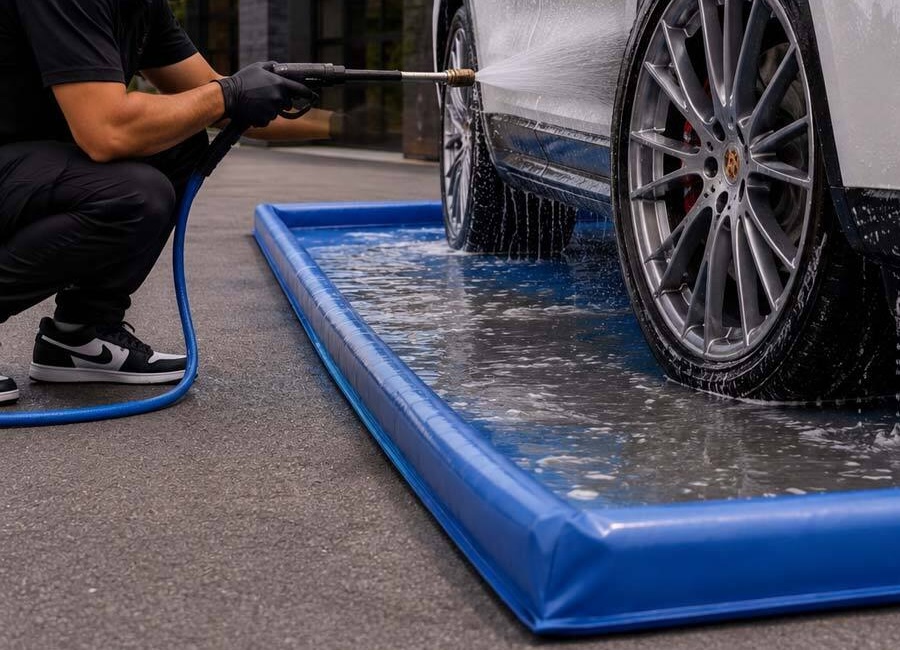
Capturing your wash water is half of compliance. The other half is what you do with the tank afterward. Dump reclaimed water in the wrong place and you have recreated the exact violation your wash mat exists to prevent, just in a different location.
This guide covers where reclaimed wash water can legally go, where it never can, and the right way to drain your tank at the end of the day.
The One Rule That Never Changes
Reclaimed wash water must never go into a storm drain, a street, a gutter, a ditch, or any place where it can flow to one. Storm systems discharge to waterways without treatment, and the law treats dumping a tank into a gutter the same as letting the water run off the driveway in the first place. Everything below is about the legal alternatives.
Legal Disposal Options for Detailers
Rules vary by city and county, so treat this as a menu of options to confirm locally, not a guarantee. When in doubt, one phone call to your local stormwater or sewer authority settles it.
1. The sanitary sewer, with permission
The most common answer. The sanitary sewer flows to a wastewater treatment plant that is designed to handle soaps, oils, and grime. Practical access points include a utility sink, a mop sink, a floor drain that you have confirmed connects to the sanitary system, or a cleanout at your own shop or home.
Two caveats. First, get the property owner’s permission before using their drain. Second, local sewer authorities set rules on what they accept, and a few require notification or approval for commercial wash water, so confirm the rules where you operate.
2. Your own shop or home base
Many mobile detailers simply bring the tank home. Draining into your own approved sanitary sewer connection at the end of the route is often the cleanest solution: one disposal point, one set of rules, no per site negotiation. If you run higher volumes, ask your sewer authority whether your discharge needs any approval, and consider an oil and water separator if your work generates heavy oil or grease.
3. Approved disposal or treatment facilities
Some municipalities designate disposal sites or accept commercial wash water at treatment facilities. Fleet yards and some commercial properties have their own oil and water separator systems and may let regular vendors use them. If you land a standing fleet account, ask. The infrastructure may already be on site.
4. Landscape irrigation, only where explicitly allowed
A few jurisdictions permit discharging small amounts of wash water to landscaped areas where it can soak in, sometimes with conditions about biodegradable soap and distance from drains. Just as many prohibit it. Never assume this one. Confirm in writing with your local stormwater program before making it part of your routine.
How to Drain Your Reclaim Tank
If you run a tank based system like the Rightlook Wash Mat Kit, disposal is a controlled process rather than a heave and a splash. With a tank that has a bottom drain port and shut off valve:
- Position the tank at your disposal point, or run a hose or place a bucket at the lower drain port to direct the flow.
- Open the shut off valve. Turn the valve handle to the open position and let the tank drain into the sanitary sewer connection.
- Close the valve completely when the tank is empty. This prevents leaks and spills during transport and storage. Always transport with the valve closed.
A few maintenance habits keep the system working and your disposal clean:
- Rinse the inside of the tank with clean water periodically to prevent soap and chemical buildup.
- Rinse the reclaim pump with clean water after use to extend its life.
- Inspect hose fittings before each job to confirm they are hand tight and leak free.
- Store the pump, hose, and tank in a cool, dry place, protected from freezing.
Keep Simple Records
You do not need a compliance department, but a simple habit protects you: note where you dispose of your water and roughly how much. A line in your job log or a photo of the disposal point is enough. If a property manager, licensing office, or inspector ever asks how you handle wastewater, you answer with specifics instead of assurances. That question is often the final hurdle for fleet and commercial contracts, and detailers who can answer it well win them.
Frequently Asked Questions
Can I dump reclaimed water in a parking lot drain?
Only if you have confirmed that specific drain connects to the sanitary sewer and you have the property owner’s permission. Many parking lot drains are storm drains. If you are not sure, do not use it.
Can I reuse reclaimed water?
For washing, generally no, unless you have filtration designed for it. Reclaimed wash water carries grit that will scratch paint and contaminants that defeat the purpose. Reclaim systems in mobile detailing are about legal capture and disposal rather than reuse.
How often do I need to empty the tank?
Empty it before it limits your next job, and do not let dirty water sit for days. Stored wash water grows bacteria and odor, and a full tank is weight you are hauling for no reason.
What about the dirt and sludge left on the mat?
Let the mat dry and sweep or scoop solids into the trash rather than rinsing them into the ground. Solids are the easiest pollutant to keep out of the water entirely.
Close the Loop on Compliance
Containment, reclamation, and disposal work as one system, and the disposal step is where your compliance story ends well or badly. Rightlook.com’s Wash Mat Kit Water Reclamation System includes the 10 by 20 mat, reclaim pump, hose, scoop, and a wastewater tank with a proper drain valve for controlled disposal. Browse all of our car wash mats and grey water containment gear, or call or text 858-271-4271 with questions about your setup.
Image note: Some images in this article may be AI-generated or AI-enhanced for illustrative purposes and may differ from the actual product.