

20 Jul Mobile Detailing Wastewater Regulations: What the EPA and Clean Water Act Require
Most mobile operators learn about detailing wastewater regulations one of two ways: from a property manager who asks how they handle runoff, or from an inspector who shows up mid-job. The first conversation wins you an account. The second one costs you a fine.
This guide explains the rules in plain language: what federal law says, how local enforcement actually works, and what a compliant mobile detailing operation looks like in practice.
The Clean Water Act: The Federal Foundation
The Clean Water Act is the federal law that governs what can be discharged into the waters of the United States. Its core rule is simple: you may not discharge pollutants into waterways without a permit.
Here is why that applies to detailing. In most cities, storm drains do not connect to a sewage treatment plant. They flow directly into creeks, rivers, lakes, and the ocean.
As a result, when wash water runs off a driveway into a storm drain, everything in it enters local waterways untreated. That includes detergents, degreasers, oil and grease, brake dust and heavy metals, and the dirt and grit that rinse off every vehicle.
The EPA treats commercial vehicle washing as a known source of stormwater pollution. Its published best management practices for vehicle washing call for containing wash water and directing it to a sanitary sewer or collecting it for proper disposal.
Discharging wash water to a storm drain without a permit is a violation, and the permits that do exist under the National Pollutant Discharge Elimination System (NPDES) are written for facilities, not for a mobile operator washing in a parking lot.
The practical takeaway for a mobile detailer: there is no version of “let it run to the drain” that complies with federal law.
State and Local Rules: Where Enforcement Actually Happens
Federal law sets the standard, but the enforcement you are most likely to encounter is local. Cities and counties operate stormwater programs under state-issued permits, and those programs are required to control pollution entering their storm systems. That responsibility flows downhill to businesses, including mobile ones.
Local requirements commonly include:
- Prohibition on discharge to storm drains. Nearly every municipal stormwater ordinance prohibits washing pollutants into the storm system. This is the rule inspectors cite most often.
- Best management practices for mobile washing. Many jurisdictions publish BMP sheets specifically for mobile detailers and power washers. These typically call for containment mats or berms, wash water recovery equipment, and disposal to the sanitary sewer with permission.
- Business licensing conditions. Some cities ask mobile washing businesses to describe their containment and disposal methods as part of licensing or registration.
- Wastewater discharge rules. If you dispose of reclaimed water into the sanitary sewer, the local sewer authority sets rules on what and how much you may discharge, and some require prior approval.
Enforcement varies widely. California jurisdictions are among the strictest, with active inspection programs and published BMPs for mobile detailing.
However, detailers in every state should assume their city has a stormwater ordinance, because nearly all of them do.
What Happens If You Get Caught
Consequences typically escalate:
- A warning or notice of violation for a first incident, often with required corrective action.
- Administrative fines for repeat or knowing violations. Amounts vary by jurisdiction, and many ordinances allow fines per day or per incident.
- Escalated penalties for serious or ongoing violations, which under the Clean Water Act can reach into significant civil liability.
The indirect costs usually hurt more. A violation on a commercial property makes the property owner’s compliance problem your reputation problem.
In addition, fleet managers and property management companies keep lists of vendors they trust, and a citation is a fast way off that list.
What a Compliant Mobile Detailing Wastewater Setup Looks Like
Compliance comes down to three capabilities: contain, reclaim, and dispose.
Contain
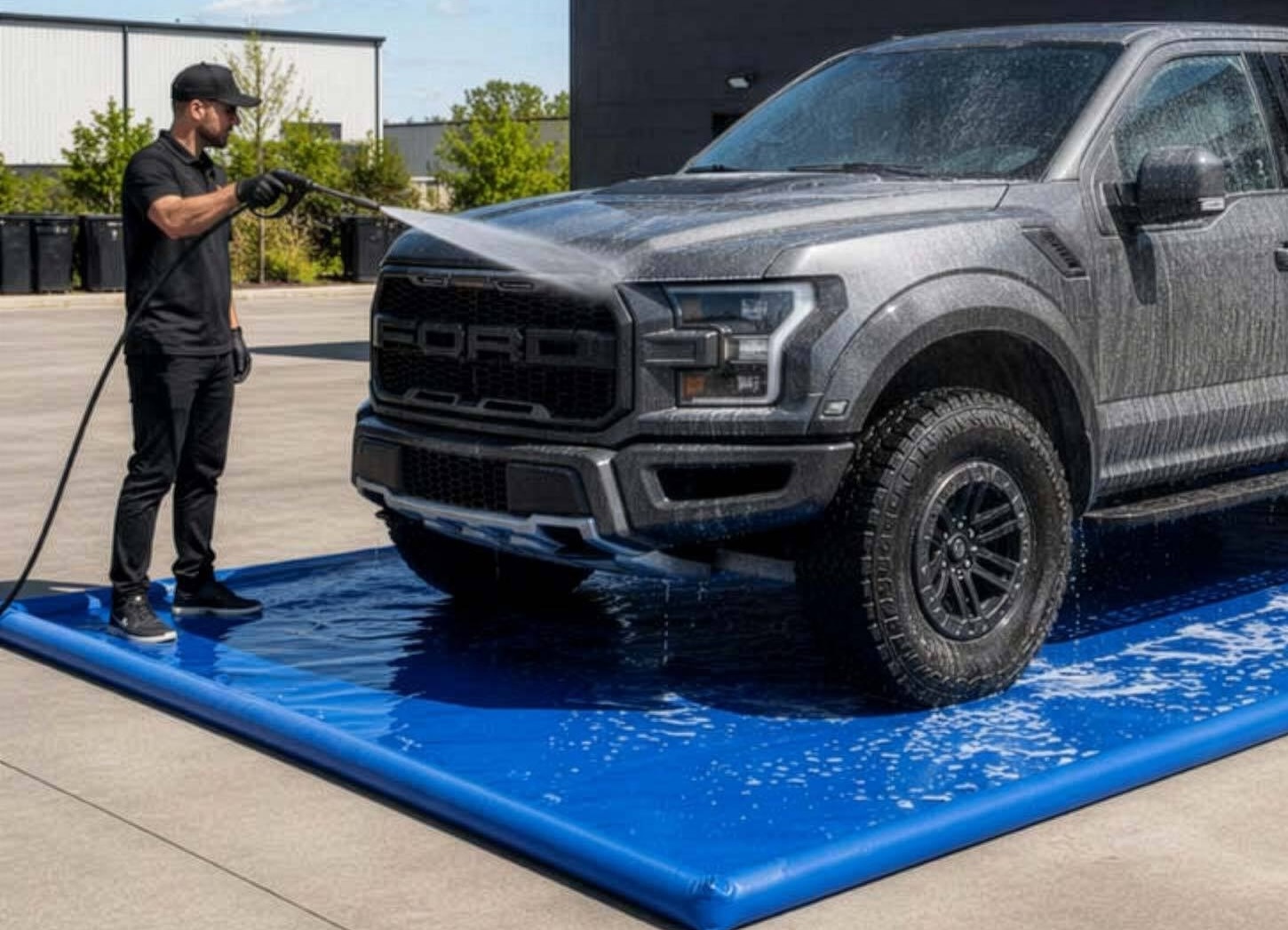
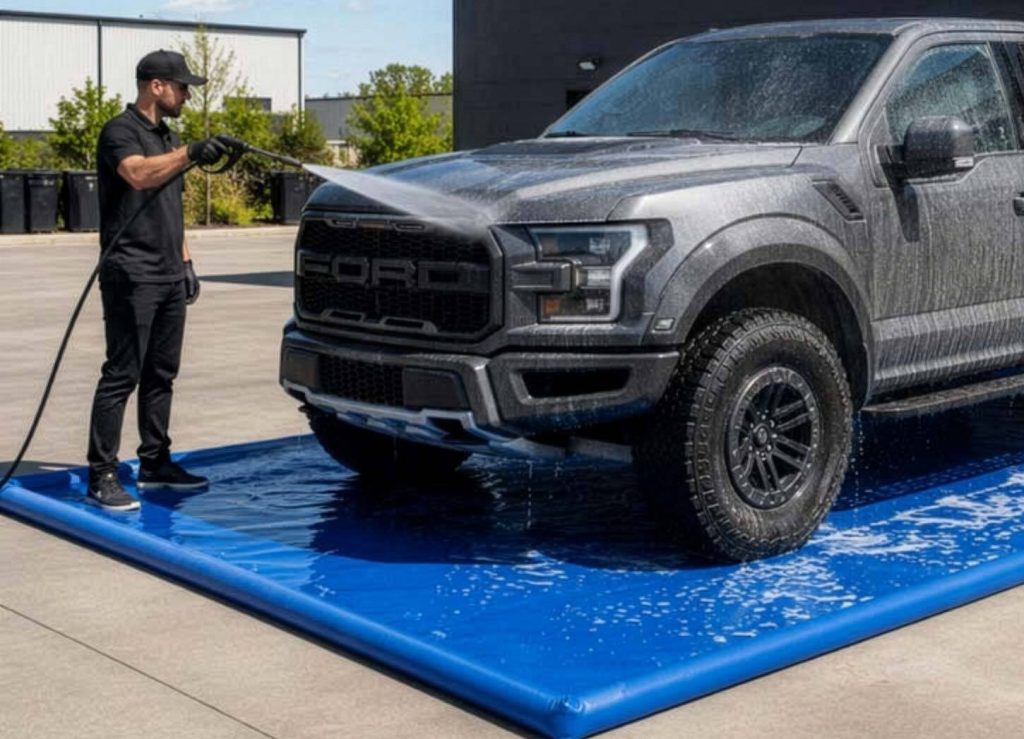
You need to keep wash water from leaving your work area. The standard tool is a water containment wash mat with raised berms that you park the vehicle on.
Berms and barriers can supplement the mat on sloped surfaces or near drains.
Reclaim
Contained water has to come off the mat. A submersible reclaim pump moves water from the mat’s low point through a hose into a storage tank while you work.
A wet vac with a filtered puddle scoop is a workable alternative for lower volumes. Either way, the water ends up in your control instead of on the ground.
Dispose
Reclaimed water must go somewhere legal. That usually means a sanitary sewer connection with the property owner’s permission, your own shop’s approved connection, or a municipally approved disposal location.
It never means a storm drain, a gutter, or a vacant lot. Our guide on how to dispose of reclaimed wash water walks through the options.
A complete wash mat kit with a pump, hose, and tank covers all three capabilities in one system. That is why property managers and inspectors recognize it as the standard for compliant mobile washing.
Turning Compliance Into a Selling Point
The detailers who thrive under these rules are the ones who lead with them. Put your water reclamation setup on your website and in your bids. Offer to walk property managers through your containment process.
Also, mention compliance in your pitch to fleets, dealerships, and HOAs. Those clients carry stormwater liability of their own and actively look for vendors who protect them.
Regulations thin out your competition. Every detailer who ignores them is one less competitor for the accounts that check.
Frequently Asked Questions
Do these rules apply if I only wash at customers’ homes?
Yes. Residential streets drain to the same storm system. Some jurisdictions are more lenient about a homeowner washing their own car than about a commercial operation, but a paid detailer is a business and is expected to contain wash water regardless of location.
Is soapy water really that harmful?
Yes. Even biodegradable soaps are toxic to fish and aquatic life in the concentrations found in wash runoff, and wash water also carries oil, metals, and grit. Storm systems deliver it to waterways with no treatment.
Do I need an NPDES permit?
Almost certainly not. NPDES permits authorize specific facility discharges. As a mobile detailer, your path to compliance is not getting a permit to discharge. It is capturing your water so you never discharge to the storm system at all.
What should I do before working in a new city?
Search the city or county name plus “mobile detailing BMP” or “stormwater ordinance,” or call the local stormwater program.
Then ask two questions: what containment do you require, and where can I legally dispose of reclaimed wash water?
Get Compliant Before Your Next Job
Wastewater compliance takes one buying decision and a few minutes of setup per job.
Rightlook.com carries car wash mats and grey water containment systems, including a complete Wash Mat Kit Water Reclamation System with a 10 by 20 mat, reclaim pump, hose, scoop, and wastewater tank.
Call or text 858-271-4271 to talk through the right setup for your operation.
Image note: Some images in this article may be AI-generated or AI-enhanced for illustrative purposes and may differ from the actual product.