

14 Sep Mobile Detailing Water Regulations in California: What Detailers Need to Know
California is the biggest mobile detailing market in the country, but understanding mobile detailing water regulations in California is essential for running a successful business here. Cities across the state do not treat wash water runoff as a technicality. They publish best management practice (BMP) sheets specifically for mobile detailers, run active inspection programs, and attach real fines to violations.
The upside: California is also where a water reclamation system pays for itself fastest, because so many properties and municipalities will only work with compliant vendors. Here is how the rules work and what major jurisdictions expect.
Mobile Detailing Water Regulations in California: The Statewide Framework
California enforces the federal Clean Water Act through the State Water Resources Control Board and nine regional water quality control boards. Cities and counties hold municipal stormwater permits requiring them to keep pollutants out of storm systems. Local programs adopt and enforce these rules based on published BMPs for vehicle washing.
The consistent statewide baseline for anyone washing vehicles commercially under mobile detailing water regulations in California includes:
- No street runoff: No wash water may enter a storm drain, gutter, or street. Storm systems in California discharge directly to creeks, rivers, and the ocean without treatment.
- Containment & capture: Wash activities must be controlled, contained, and captured. That specific language appears in BMP documents across the state.
- Proper disposal: Captured water must be disposed of legally—typically to the sanitary sewer with permission, or in select jurisdictions, to landscaped areas under strict conditions.
Every city adds its own details on top of that baseline. Two major municipal examples show the pattern.
San Diego Rules
San Diego County publishes guidance aimed directly at mobile vehicle washing. Commercial washing must prevent dirty water from entering the storm system, period. Enforcement has teeth: penalties can run up to $10,000 per day per incident for illegal discharges.
San Diego’s guidance also spells out acceptable disposal, which gives detailers a workable playbook. Options include discharging to a landscaped area where the water fully soaks in with no runoff, or discharging to the sanitary sewer at the customer’s site through a private connection (subject to a flow limit of 20 gallons per minute). A reclaim tank with a controlled drain valve makes that second option practical, because you can meter the discharge instead of dumping it quickly.
Los Angeles Regulations
The City of Los Angeles has regulated mobile washers—a category that explicitly includes mobile car washing and detailing—since 2001. LA Sanitation requires mobile operators to properly handle and dispose of wash water rather than letting it reach the storm system, running regular outreach programs for operators. Surrounding cities in LA County publish their own BMP sheets for mobile vehicle detailers with the same core requirements: contain the water, capture it, and dispose of it to the sanitary sewer.
How California Mobile Detailing Water Regulations Vary by City
You will find the same pattern in the Bay Area, Sacramento, Orange County, and the Inland Empire. Most cities publish a mobile business or mobile washing BMP that calls for:
- A water containment wash mat, berms, or other barriers that keep wash water off pavement and away from drains.
- Recovery equipment such as a pump, wet vac, or vacuum berm to collect contained water.
- Disposal to the sanitary sewer with the property owner’s permission, or another locally approved method.
- Proof of these practices as a condition of receiving or renewing a business license in select cities.
Before working in a new city, search its name plus “mobile detailing BMP” or call its stormwater division. Two questions get you everything you need: what containment is required? and where can reclaimed water go?
What Compliance Looks Like in Practice
A California-ready mobile setup is the same one we recommend everywhere, just with zero room to cut corners:
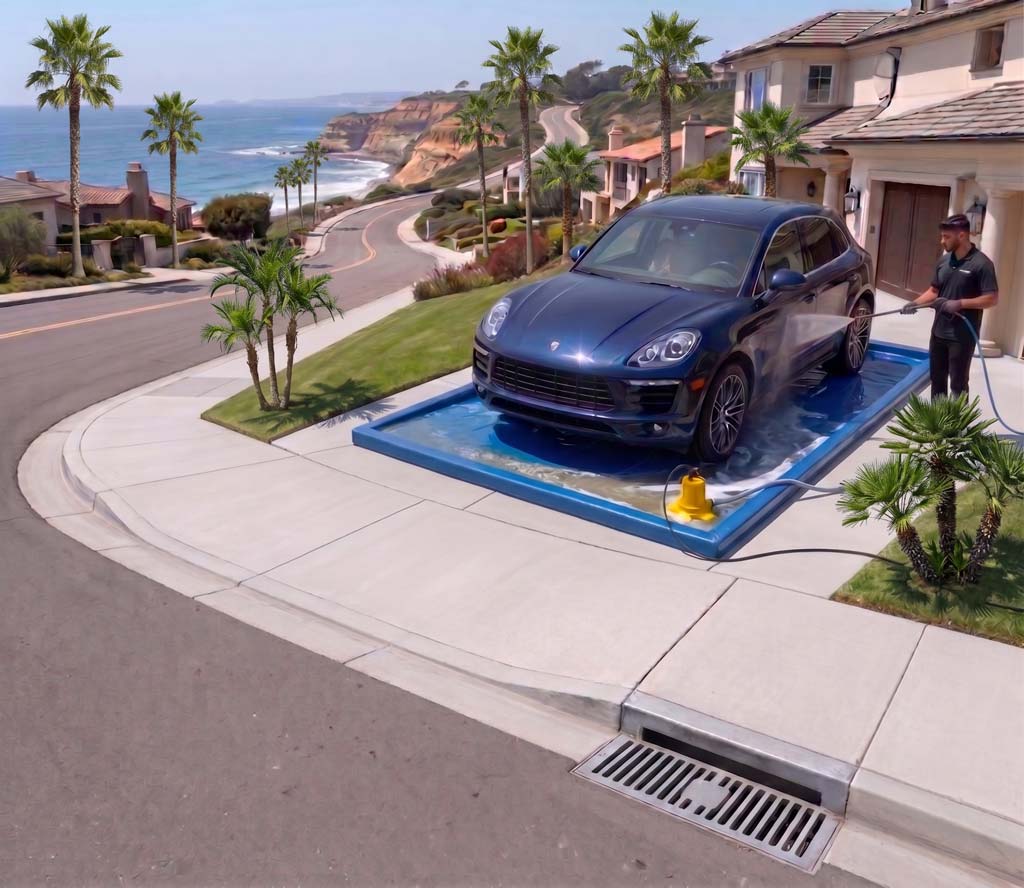
- A bermed wash mat under the vehicle captures wash water before it can reach pavement. On sloped sites, supplemental berms keep water on the mat side of any drain.
- A submersible reclaim pump moves water from the mat’s low point into a storage tank as you work, preventing spillover.
- Controlled disposal: A tank with a shut-off valve lets you discharge to an approved sewer connection at a controlled rate, meeting strict municipal flow limits like San Diego’s 20 GPM cap.
Equipping your setup with a dedicated Wash Mat Kit Water Reclamation System ensures you satisfy these requirements out of the box.
Turn Strict Rules Into an Advantage
California’s strict enforcement environment filters your competition. Property managers here ask about water handling before anything else, many municipal and corporate fleets require documented BMPs from vendors, and detailers who show up with a mat, pump, and tank win work that undocumented competitors never see. Lead with your compliance story on your website and in every commercial bid.
Frequently Asked Questions
Do I need a special permit to operate a mobile detailing business in California?
Requirements vary by city. Most require a standard business license, and some ask mobile washers to describe their wash water practices. Check both the city where your business is based and the cities where you perform work.
Can I discharge to a lawn or landscaping in California?
Some jurisdictions, including San Diego, allow discharge to landscaped areas if the water fully infiltrates with no runoff. Others prohibit it outright. Confirm with the local stormwater program before relying on landscaping disposal.
Are fines for mobile detailing water regulations in California really enforced?
Yes. California cities run active stormwater inspection programs, and mobile detailing is a high-visibility activity. San Diego’s penalties can reach $10,000 per day per incident. A single fine costs significantly more than a complete reclamation system.
Does rain change anything?
Working in the rain makes containment harder and violations more likely because runoff reaches storm systems faster. If you must work during wet weather, tighten your containment and consider rescheduling exterior washes.
Get California Ready
If you detail anywhere in California, a wash mat and water reclamation system is the cost of entry—and the fastest path to securing top commercial accounts. Rightlook.com is based in San Diego and has equipped professional detailers since 1998. Explore our water reclamation products or call or text 858-271-4271 to speak with an expert today.
Image note: Some images in this article may be AI-generated or AI-enhanced for illustrative purposes and may differ from the actual product.